A Monumental Ladakhi Fire-Gilt Bronze Figure of Shakyamuni Buddha, 18th Century
Impossible de charger la disponibilité du service de retrait
Prix habituel
$10,123.00 USD
Prix habituel
Prix promotionnel
$10,123.00 USD
Dimensions: H 37.5 × W 25.5 cm
Weight: 4.2 kg
Material: Fire-gilt bronze
Dating: 18th century
Region: Ladakh, Western Himalayas
Deity: Shakyamuni Buddha
Price: Make an Offer
A Powerful Bronze from the Western Himalayas
Cast with remarkable weight and presence, this 18th-century Shakyamuni Buddha belongs to the distinctive Buddhist artistic tradition of Ladakh. The sculpture stands 37.5 cm high yet weighs an impressive 4.2 kg, giving it the substantial character associated with important altar bronzes rather than lightweight decorative production.
The Buddha is shown in a composed, meditative form, with the calm facial expression, monastic robe and carefully worked hair characteristic of Himalayan sacred sculpture. Its artistic vocabulary reflects Ladakh's historic position between Tibet, Kashmir, Nepal and the wider Central Asian world, where different sculptural traditions met and developed into a recognisable regional language.
Fire-Gilded Surface with Genuine Age
A considerable amount of the original fire gilding remains across the bronze. Instead of appearing uniform, the gold has developed a complex surface: protected recesses retain stronger gilding while exposed areas of the face and body show gradual wear.
This contrast is particularly visible around the nose, cheeks and raised contours. The result is a surface that records the history of the object rather than concealing it. Darkened deposits, exposed bronze and surviving gold occur together naturally across the sculpture.
Hand-Finished After Casting
Close examination reveals extensive manual finishing. Fine filing and abrasion marks remain visible in sheltered areas around the neck and robe, while the hair curls were individually defined after casting. The gilding lies over these worked surfaces, establishing the sequence of manufacture: casting, detailed cold working and finally gilding.
The robe is further distinguished by a finely engraved border composed of repeating circular and geometric motifs. Such decoration required considerable additional labour after the main casting had been completed and gives the otherwise restrained monastic garment a subtle richness.
A Face Shaped by Ritual History
The face is among the strongest elements of the sculpture. Almond-shaped eyes, a gently modelled mouth and balanced features create an expression of controlled serenity rather than theatrical emotion.
Protected facial recesses preserve traces of historic surface treatment and dark pigmentation. Combined with the softened gilding on the projecting features, these details give the Buddha the unmistakable visual depth of an object that has undergone repeated handling and ritual care.
The Interior Tells Another Story
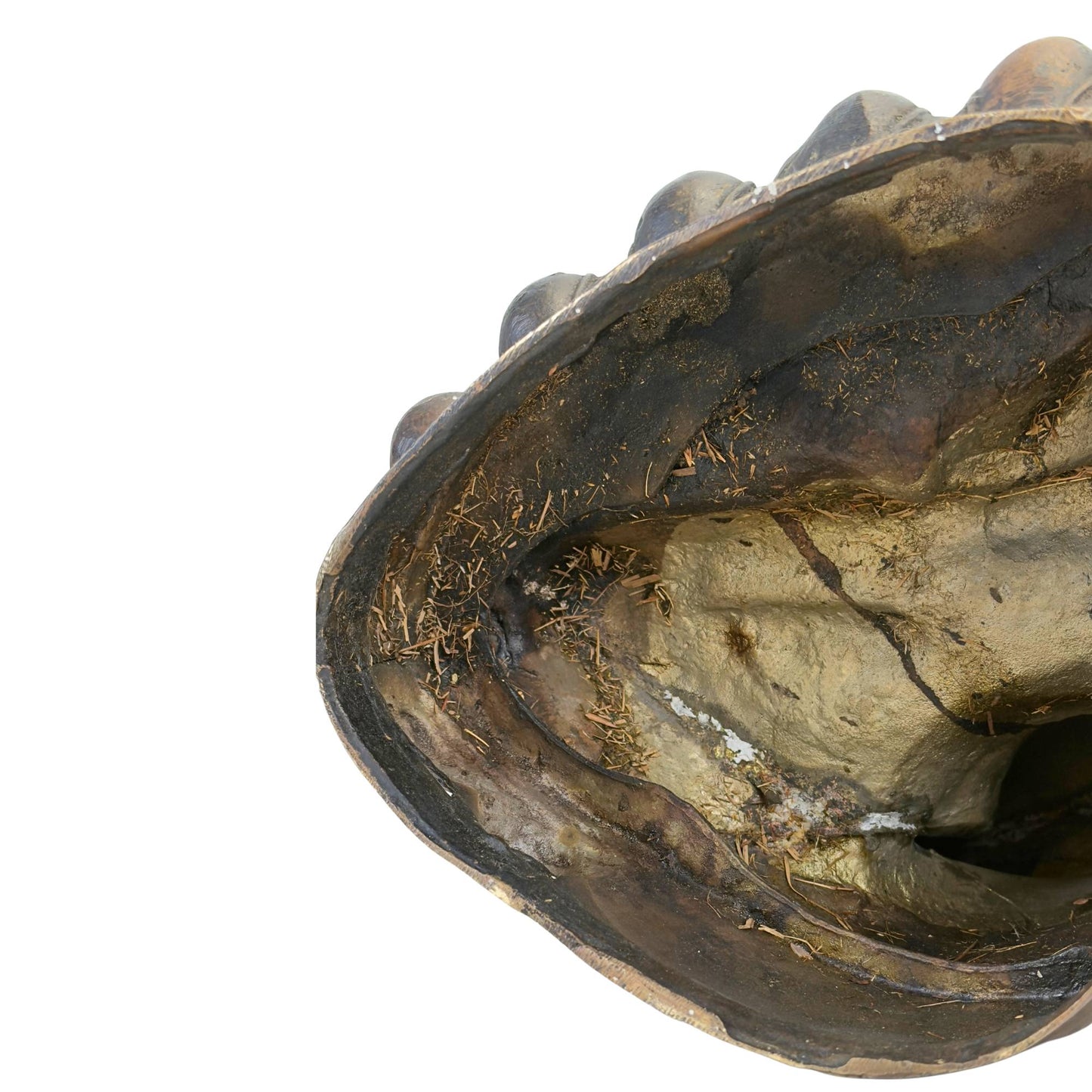
The open underside provides an unusually clear view into the construction of the sculpture. Here the polished appearance of the exterior gives way to the raw evidence of traditional lost-wax casting.
Clay-like casting-core material survives internally together with irregular shrinkage structures and mineral deposits. White crystalline formations are visible