Antique bronze Budai statue China late Qing dynasty 23cm
Couldn't load pickup availability
Physical Dimensions & Condition
Height: 23.0 cm | Base: 9.5 cm | Weight: 1.8 kg (Heavy Bronze Alloy)
This monumental, heavy bronze Budai statue (23 cm, 1.8 kg) depicts the laughing Buddha in his most powerful and sought-after iconography: the standing posture with hands raised in the air. This rare altar statue dates from the late Qing Dynasty to the early Republic period (c. 1880–1920) and is in an untouched, high-quality gallery condition.
The Philosophical Significance: Prosperity, Happiness, and Spiritual Wealth
Budai (better known as the Laughing Buddha) is one of the most beloved symbols in Eastern philosophy. While seated Budai statues often represent tranquility and meditation, this specific standing posture carries an active and dynamic promise:
- The Hands-Up Pose for Prosperity: The raised hands symbolize the celebration and attraction of abundance, success, and ultimate financial prosperity. It is a powerful cosmic gesture of pure reception and the manifestation of good fortune.
- Unconditional Joy: His generous, wide smile reminds us that true spiritual wealth comes from inner contentment and the release of worldly worries. Budai transforms the energy in any space, bringing immediate positivity and harmony.
- The Big Belly as a Storehouse of Happiness: His full, round belly symbolizes a magnanimous character, generosity, and the capacity to receive all the good things in life in abundance. In tradition, touching the belly is equivalent to activating personal happiness.
The acquisition of this Budai not only introduces a timeless symbol of joy and wealth into your environment but also serves as a daily anchor for an optimistic and prosperous attitude towards life.
Unique Historical Value: A Verified Antique Masterpiece
What truly makes this object exceptional for the collector is its unmistakable age and museum-grade status confirmed by strict forensic markers:
- Decades of Friction Patina: The statue is cast from a heavy-quality bronze-brass alloy. The deep, dark cuprite skin shows brilliant, warm gold-copper highlights on the prominent parts (such as the belly, knees, and nose). This is the direct and inimitable result of over a century of human touches and ritual veneration on an authentic home altar.
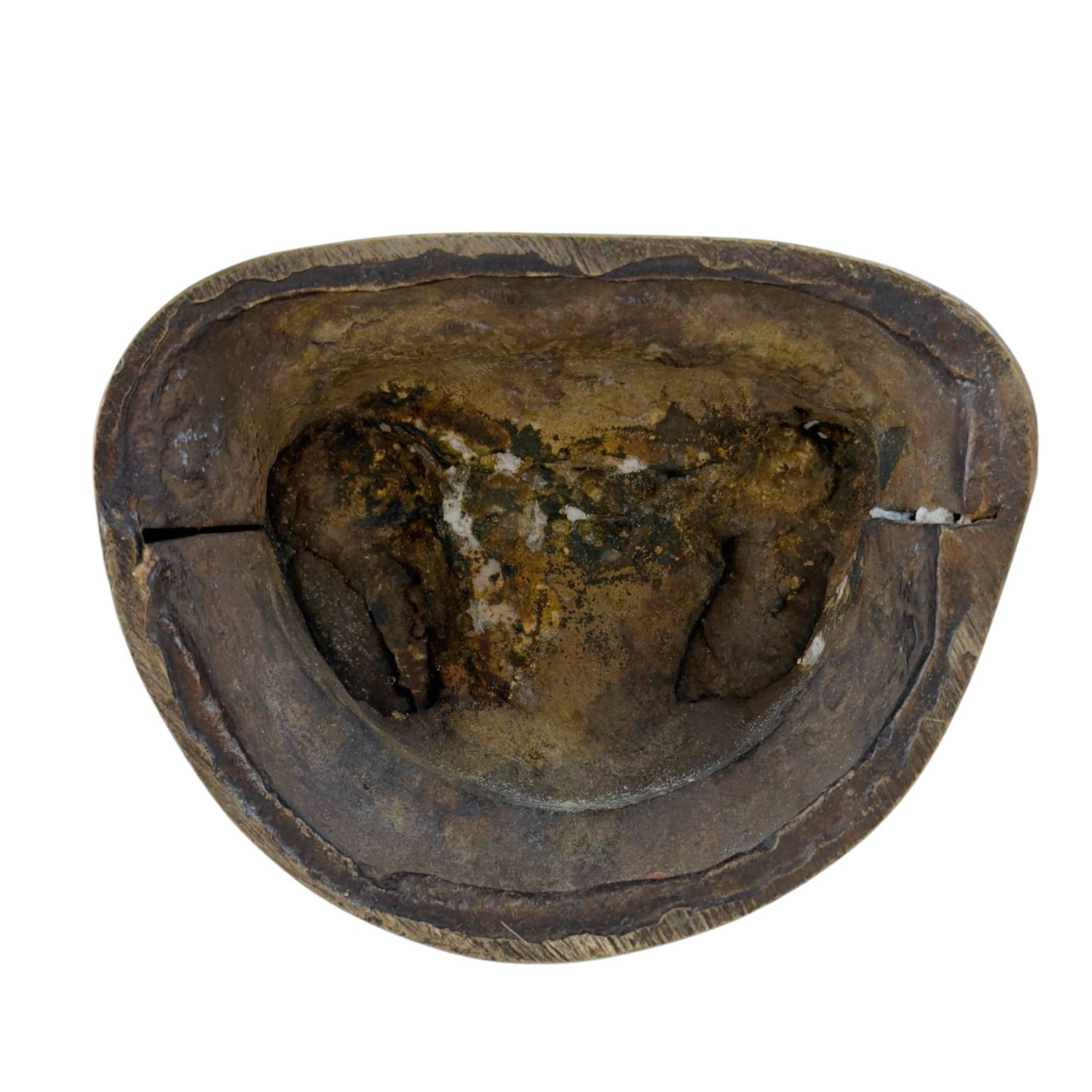
- Petrified Casting Core with Mineral Efflorescence: On the open underside, the original casting core of sand and clay is still fully intact and deeply petrified within the cavity. This medium shows a natural, white mineral salt efflorescence. This crystallization can only occur through a prolonged, decades-long maturation process under atmospheric conditions and is impossible to artificially imitate.
- Traditional Casting Process: The inside of the casting cavity shows the original, hand-modeled wax flow lines and manual deburring marks along the standing ring. There is a complete absence of modern industrial grinders, machine welding, or synthetic resins. This is pure, pre-industrial craftsmanship.
Specifications
- Dating: Late Qing Dynasty to Early Republic Period (c. 1880–1920)
- Origin: China (ex-altar provenance)
- Technique: Handmade, heavy bronze casting using the lost-wax method (cire perdue)
- Height: 23.0 cm
- Base Diameter: 9.5 cm
- Weight: 1.8 kg (high mass density)
- Condition: Gallery Grade (100% forensically verified antique with natural age characteristics)