19th-Century Burmese Mandalay Buddha – Solid Teak (50.5 cm)
Couldn't load pickup availability
Physical Dimensions & Status
Height: 50.5 cm | Width: 40.5 cm | Weight: 5.4 kg
This monumental Burmese Buddha statue (50.5 cm) from the late Konbaung dynasty is an exceptional example of the early Mandalay style. The sculpture is entirely hand-carved from a single solid block of Burmese teak wood and boasts an impressive width of 40.5 cm, giving the statue a powerful and stable appearance. The combination of refined wood carving, original Thayo lacquer decoration, Hmankazi mirror inlay, and beautifully aged gilding makes this a museum-worthy collector's item that radiates both spiritual depth and exceptional craftsmanship.
The Philosophical & Spiritual Significance: Why this statue is essential
This Shakyamuni Buddha depicts the decisive moment when enlightenment was achieved and symbolizes the triumph of wisdom over all worldly temptations.
- Bhumisparsha Mudra: With his right hand, the Buddha touches the earth as a witness to his enlightenment. This iconic hand gesture represents steadfastness, truth, and the definitive victory over Mara, the personification of ignorance and desire.
- Wide Meditative Posture: The powerful, stable sitting posture emphasizes inner peace, spiritual balance, and complete mastery of body and mind.
- Mandalay Aesthetic: The harmonious facial features, refined body proportions, and rich ornamentation are among the most beloved characteristics of classical Burmese temple art.
- Spiritual Presence: Thanks to its monumental size, this statue forms an impressive centerpiece within a meditation space, exclusive interior, or high-quality Asian art collection.
Material & Craftsmanship Analysis
- Monolithic Teak Wood: The sculpture is entirely carved from a single solid block of Burmese teak wood, a durable wood known for its exceptional stability and rich grain structure.
- Thayo & Hmankazi: The robe is richly decorated with traditional Thayo lacquer relief and inlaid with original Hmankazi mirror tesserae, a hallmark of high-quality Burmese temple art.
- Original Gilding: Remnants of historical gold leaf and the authentic lacquer layers give the statue a warm, age-old appearance with a beautifully nuanced patina.
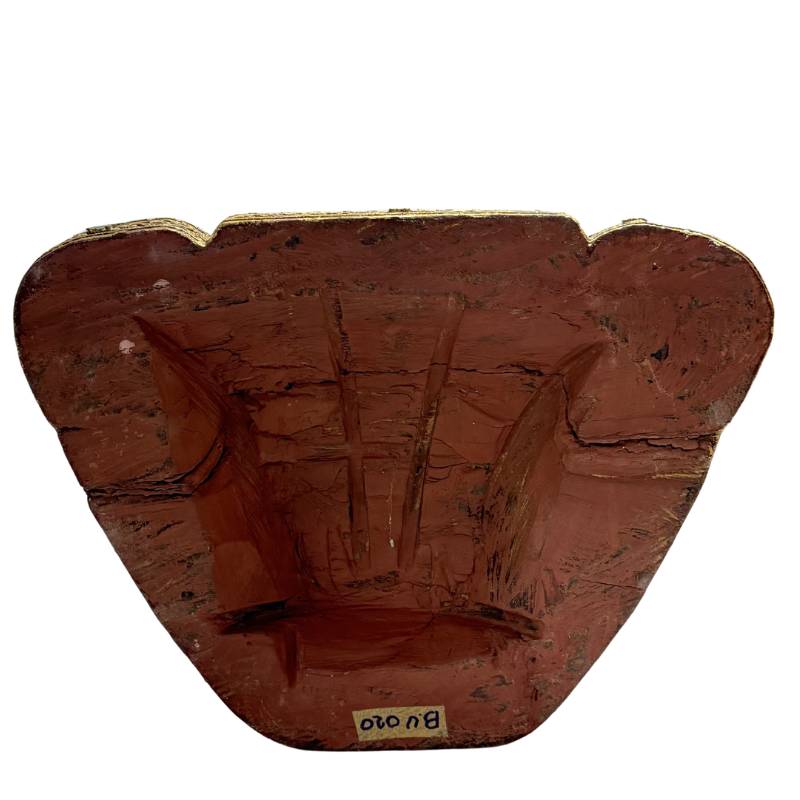
- Traditional Construction: The professionally hollowed-out underside reduces tension in the massive wood and exclusively shows authentic manual gouge and chisel marks. The historical collection designation "B.U. 020" on the back refers to a former European private collection.
Specifications
- Height: 50.5 cm
- Width: 40.5 cm
- Weight: 5.4 kg
- Origin: Myanmar (Burma)
- Period: Late Konbaung Dynasty / Early Mandalay Period (c. 1880–1900)
- Material: Monolithic Burmese teak wood with Thayo relief, Hmankazi mirror glass, and remnants of gold leaf
- Iconography: Shakyamuni Buddha in Bhumisparsha Mudra
- Condition: Excellent authentic museum quality with original gilding, historical lacquer layers, and rich use patina