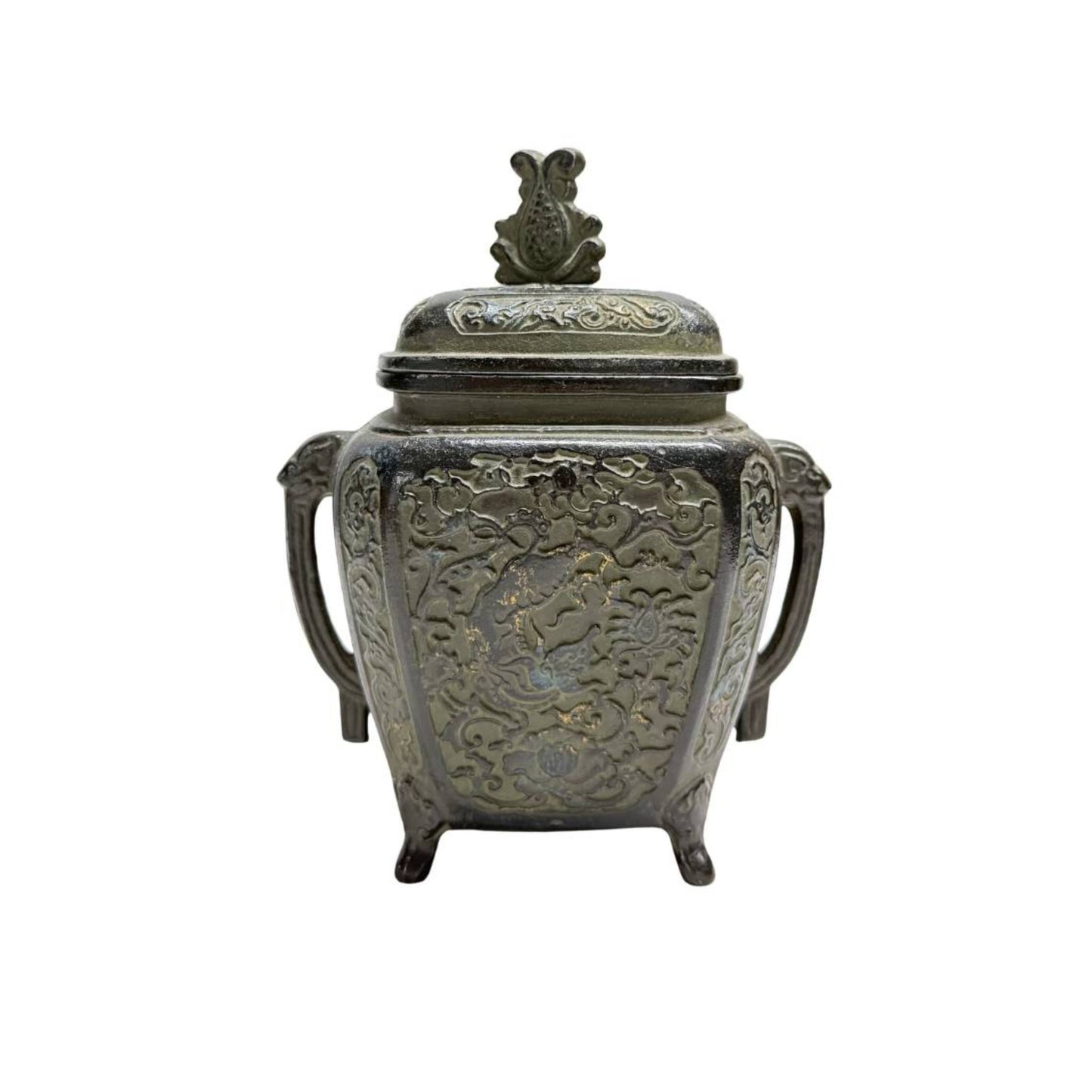
Antique Japanese Bronze Koro Incense Burner with Dragon Relief - Meiji Period Altar Censer
Couldn't load pickup availability
Physical Dimensions & Status
Height: 18.0 cm | Width: 16.5 cm | Weight: 1.2 kg
This antique Japanese Koro incense burner (18 cm) from the Meiji period is a refined example of traditional Japanese bronze casting. The square burner is richly decorated all around with powerful reliefs of mythological dragons moving among stylized clouds and floral ornaments. The handles are designed as elegant dragon heads, and the original, perfectly fitting lid is crowned by an elegant lotus bud (hoju). The deep dark brown patina, combined with visible remnants of historical fire gilding, gives this object an exceptional appearance and makes it a special collector's item for lovers of Japanese altar art.
The Philosophical & Spiritual Significance: Why this object is special
A Koro has been at the heart of Buddhist rituals and home altars in Japan for centuries. Incense symbolizes the purification of body and mind and is seen as an offering to the Buddha and ancestors.
- Japanese Dragon (Ryū): In Japanese tradition, the dragon symbolizes protection, wisdom, prosperity, and control over natural elements.
- Lotus Bud (Hoju): The crowning of the lid refers to spiritual purity, enlightenment, and the precious jewel that fulfills all wishes.
- Altar Function: Korō were used during daily Buddhist rituals, meditation, and ancestor worship, with rising incense symbolizing the connection between the earthly and spiritual worlds.
- Timeless Decoration: Thanks to its powerful design and rich patina, this object makes an impressive work of art in both classic and modern interiors.
Material & Craftsmanship Analysis
- Meiji Bronze Casting: The burner is crafted from high-quality cast bronze with sharply detailed reliefs characteristic of the refined metalwork from the Meiji period.
- Historical Gilding: In the recessed parts of the decoration, remnants of the original fire gilding are still visible, giving the relief extra depth and vibrancy.
- Original Ensemble: Burner and lid originally belong together and fit perfectly, an important quality feature for antique Japanese Korō.
- Authentic Patina: The inside shows historical traces of incense use and natural oxidation, while the outside has a rich dark brown patina that only develops through prolonged aging.
Specifications
- Height: 18.0 cm
- Width: 16.5 cm
- Weight: 1.2 kg
- Origin: Japan
- Period: Meiji period (1868–1912)
- Material: Bronze with remnants of historical fire gilding
- Decoration: Dragon relief, dragon head handles, and lotus bud (hoju)
- Application: Suitable for incense sticks or incense cones (with incense ash)
- Condition: Excellent authentic antique condition with original patina; lid and burner originally belong together