Antique Tibetan Ushnishavijaya (Namgyalma) for a long life.
Couldn't load pickup availability
Important Antique Tibetan Ushnishavijaya (Namgyalma) – Nepal/Ladakh – 18th Century
Specifications: 21 cm high | 19 cm wide | 2.30 kg (Solid, thick-walled temple casting) An exceptional, museum-quality, and monumental heavy antique Himalayan bronze of the three-headed and eight-armed goddess of Long Life: Ushnishavijaya (known in Tibetan as Namgyalma). This altar statue was cast in the 18th century using the traditional lost-wax method (cire perdue). Despite its compact height of 21 cm, the statue weighs no less than 2.30 kilos, indicating an extremely thick-walled and solid casting of the highest monastic quality.
Spiritual Function & Protection
Within Tibetan Buddhism, Ushnishavijaya is one of the most powerful and specific protective goddesses. She is the goddess of victory over death, extreme purification, and longevity. Together with White Tara and Amitayus, she forms the three Buddhas of Long Life. Her presence has three crucial spiritual functions:
- Protection against premature death: Her main task is to ward off acute dangers, severe illnesses, and accidents that can prematurely shorten the natural lifespan. She acts as a spiritual shield that knocks away negative obstacles.
- Extreme karmic purification: Namgyalma possesses the unique power to destroy heavy negative karma from the past and from previous lives down to the root. Her energy cleanses deep spiritual blockages that stand in the way of healing, prosperity, or enlightenment.
- Giver of life force and vitality: In her central hands on her lap, she holds the kalasha (the sacred vase of life). This one is filled to the brim with the amrita: the divine nectar of immortality, ultimate health, and deep spiritual wisdom.
Irrefutable Technical Proof of Age
Because this model was frequently reproduced for commercial export at the end of the 20th century, this unique 18th-century example distinguishes itself through irrefutable, authentic metalworking facts:
- The Manual Chasing: Microscopic examination of the facial features (eyelids, corners of the mouth, and wings of the nostrils) shows razor-sharp, angular indentations. These are the authentic, pre-industrial chisel marks of the goldsmith who manually stretched the metal. This stands in sharp contrast to the fleshy, round shapes of modern rubber molds.
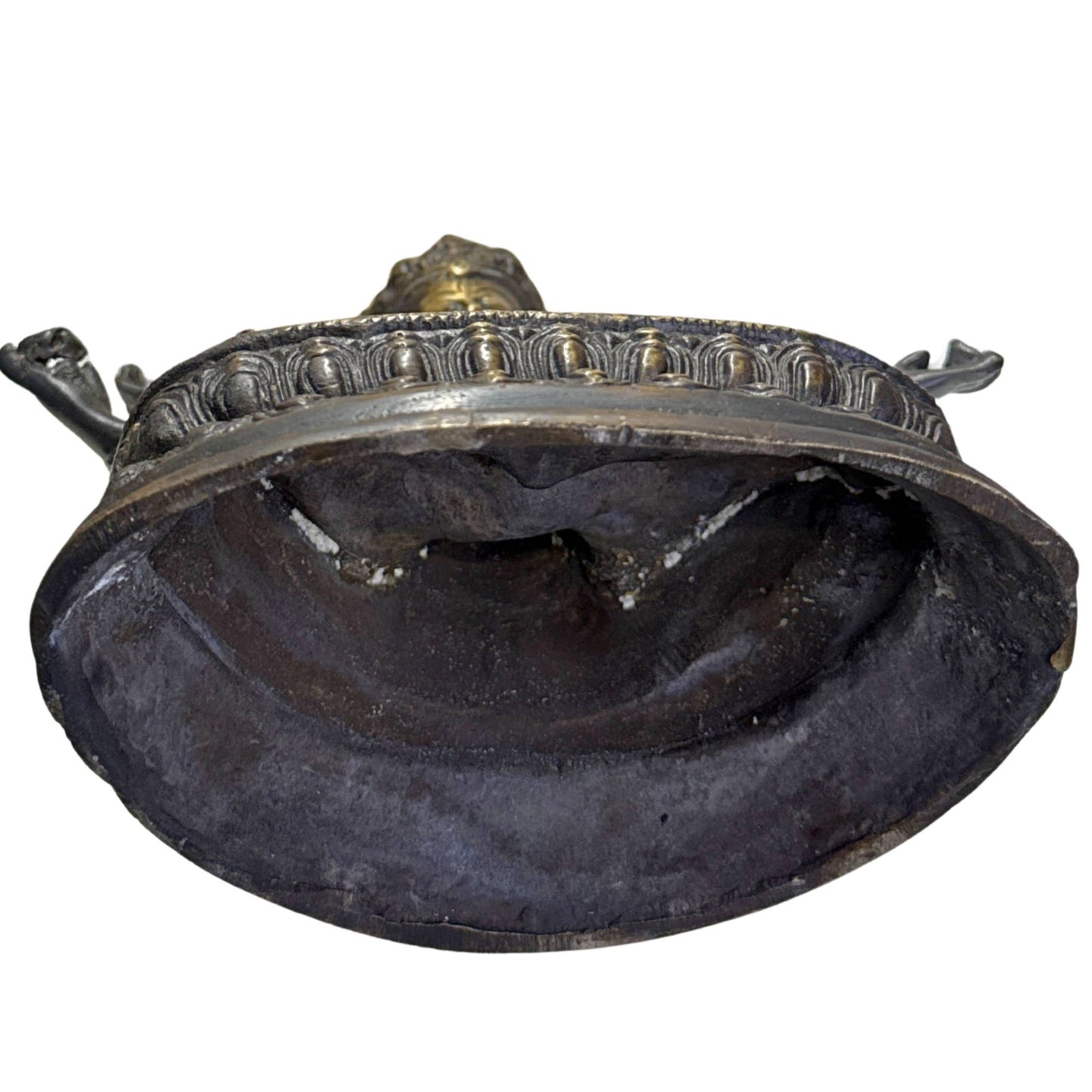
- The Authentic Borax Crystals: Both deep inside the open base and in the deep folds of the corner of the mouth, there are hard, glistening, white-greenish deposits of crystallized borax salt. This historical flux has "sweated" out of the pores of the bronze after centuries of exposure to humidity and is immovably caked under the original temple patina. The Open Bottom Tradition: Entirely in line with the early casting traditions of Nepal and the Ladakh region, the bottom has historically always been left open and uncovered, without a copper closing plate. The interior displays the whimsical, undulating metal folds of old craftsmanship and is completely free of modern plaster or factory cores. The Patina: The statue possesses a magnificent, deep olive and chocolate brown temple patina with a beautiful layered gold skin in the deeper grooves (remnants of early fire gilding). Decades of intense ritual practices in the monastery have softly polished the edges of the lotus base.
Product details
| Culture / Region: | Himalayan region (Nepal / Ladakh tradition) |
| Period: | 18th century (ca. 1750–1800) |
| Material: | Thick-walled cast bronze / monastic copper alloy with remnants of fire gilding |
| Height: | 21 cm |
| Width: | 19 cm |
| Weight: | 2.30 kg (Extremely heavy, solid casting) |
| Condition: | Exceptional antique condition. Completely original and unrestored. The authentic crystal and patina layers have been left completely intact. |