Nepalese Four-Armed Avalokiteshvara – Fire-Gilt Bronze – 17th Century – 55 cm
Couldn't load pickup availability
Regular price
$33,261.00 USD
Regular price
Sale price
$33,261.00 USD
Price: €27,980
Dimensions: H 55 × W 20.5 cm | Weight 6.0 kg | Fire-gilt bronze | Nepal | 17th century | Ref. 265
A substantial Nepalese figure of four-armed Avalokiteshvara (Lokeshvara), cast in heavy bronze and retaining traces of its original fire gilding. The elongated standing posture, multiple arms, elaborate crown and small seated Buddha in the coiffure are consistent with the Newar Buddhist sculptural tradition of the Kathmandu Valley.
Iconography
Avalokiteshvara is the bodhisattva of compassion. The four arms signify his capacity to respond in multiple ways to the needs of sentient beings. The small seated Buddha in the crown identifies the figure with Amitabha and the Avalokiteshvara lineage.
Surface and gilding
Substantial remnants of the original fire gilding survive across the surface. The gold is integrated into the aged metal skin rather than appearing as a later coating. Green and blue copper corrosion products occur throughout, with deeper mineralisation in protected recesses.
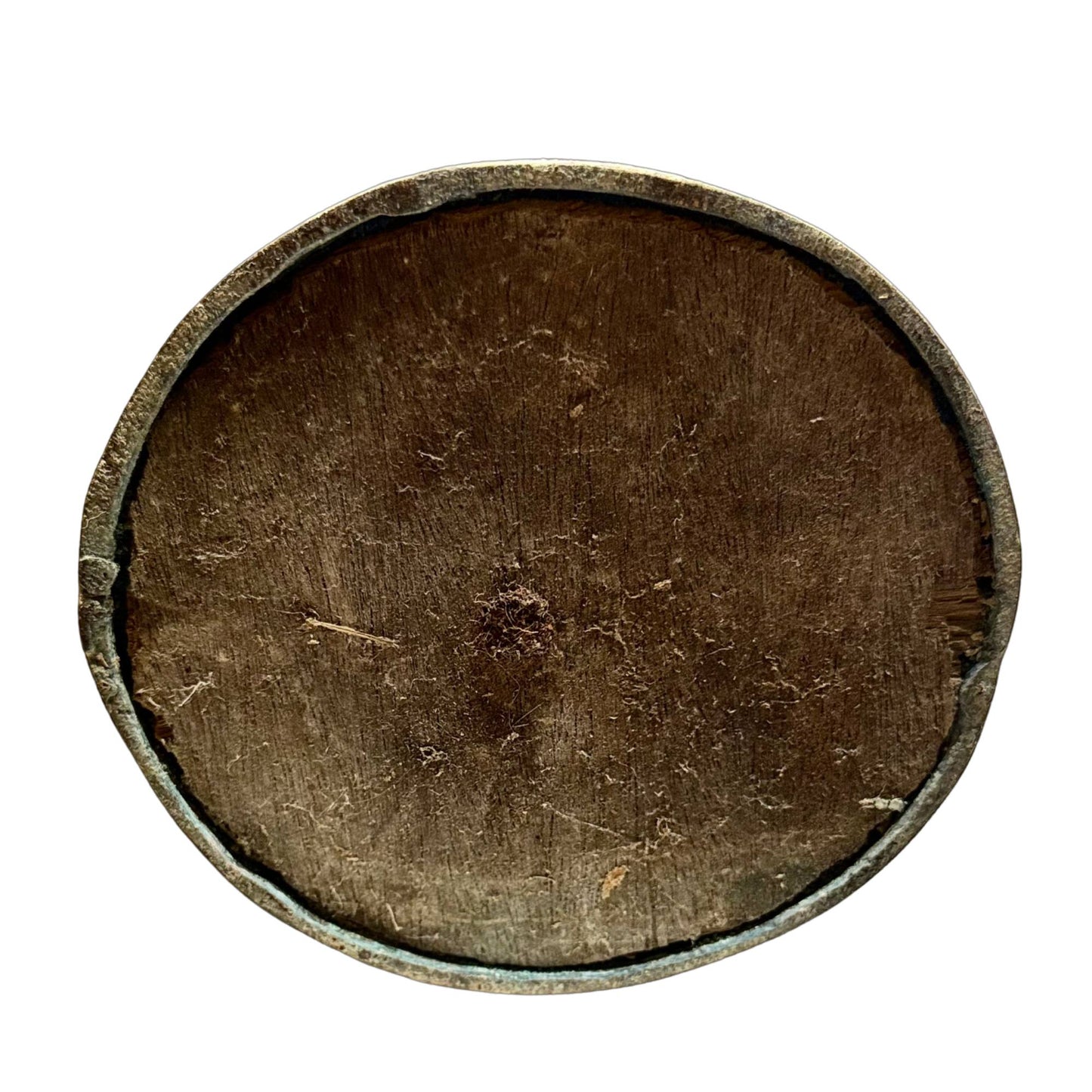
Wooden base closure
The underside retains an old wooden closing plate fitted to the base, consistent with Himalayan ritual practice in which a hollow image was sealed after consecration. The timber shows shrinkage, fibre degradation and long-term contact alteration. Along the bronze-to-wood junction are intense blue-green crystalline deposits associated with prolonged copper corrosion in the confined interface.
Technical observations
Microscopic examination reveals surviving gilding, natural copper oxidation, blue-green mineralisation, abrasion and old accretions. The base construction, aged wooden closure and long-developed corrosion phenomena together support substantial age.
Condition
Good antique condition, with expected wear to the gilding, patination and local oxidation. Surface asymmetry, abrasion and mineral deposits are part of the historical condition and have not been cosmetically over-restored.
An imposing Nepalese bronze of strong sculptural presence, distinguished by scale, iconography, surviving fire gilding and its old ritual base closure.