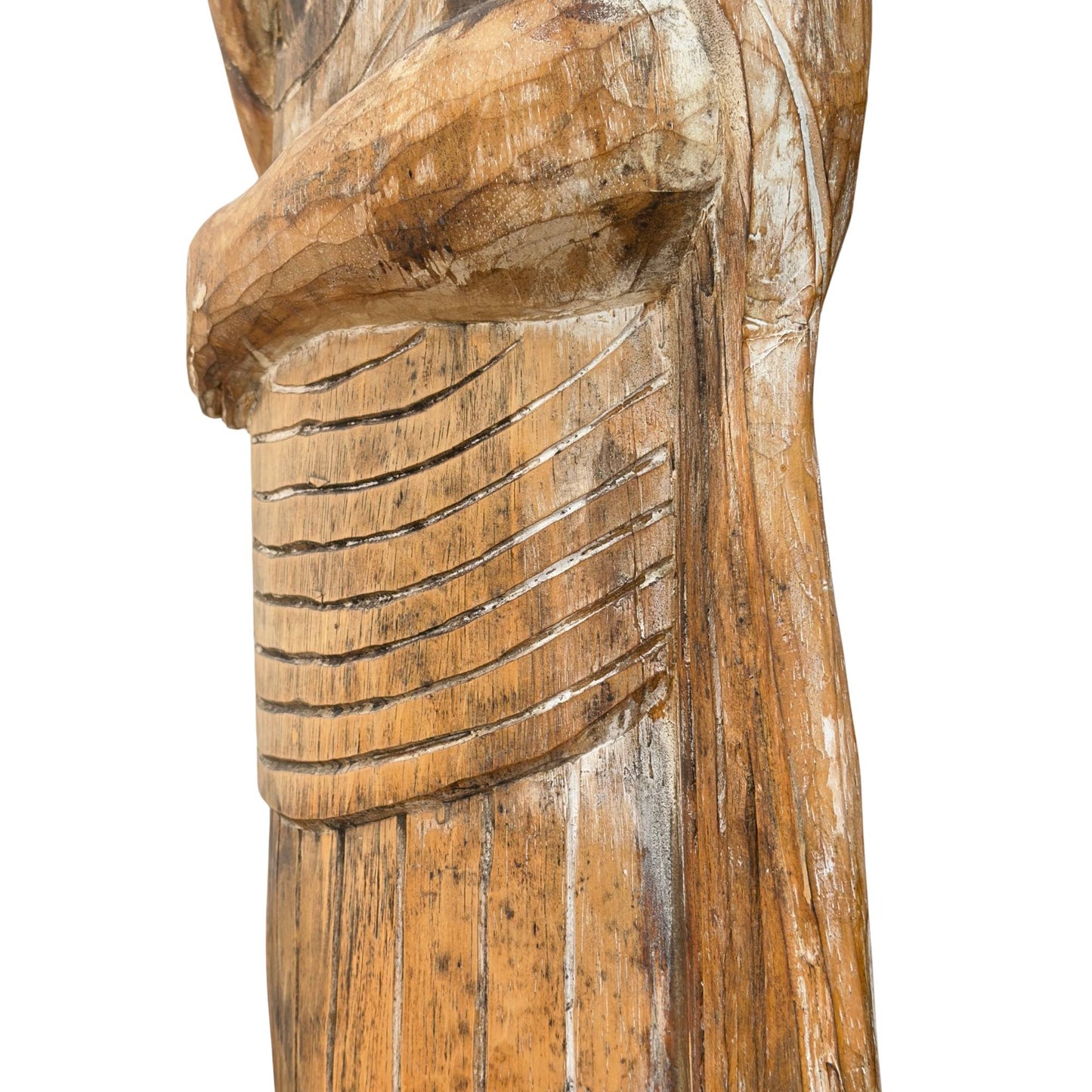
Antique Teak Medicine Arhat Statue Burma 18th Century 151.5cm
Couldn't load pickup availability
Regular price
$8,222.00 USD
Regular price
Sale price
$8,222.00 USD
Physical Dimensions & Status
Height: 151.5 cm | Width: 36.5 cm | Mass: 42 kg (Solid Teak Wood)
Unique object — after sale, permanently unavailable. This life-sized, masterful temple altar masterpiece (151.5 cm) belongs to the absolute top category of early sacred art from Myanmar (Burma). There is no second example worldwide of this unrestored historical document.
A breathtaking 'trophy-piece' for the demanding connoisseur, top architect, and collector. This monumental interior anchor combines raw Wabi-Sabi wood architecture with a deep, ancient spiritual presence.
- ✓ Museum-quality masterpiece: 100% forensically verified sacred masterpiece from the 18th century (Ava period, approx. 1750–1820)
- ✓ Extremely rare iconography: Standing Medicine Arhat with the sacred Myrobalan fruit (Haritaki) for overall spiritual and physical healing
- ✓ Monumental Wabi-Sabi aesthetic: Monolithically hand-carved from a single massive, ancient trunk of Burmese top-quality teak wood (42 kg)
- ✓ Historical structural stabilization: Unique, original 18th-century hand-forged iron monastic clamps with proven iron-tannin reaction
- ✓ Forensically verified: Intact end grain with adze marks, authentic Thit-si lacquer layers, and certified UV fluorescence
- ✓ Worry-free premium delivery: Worldwide, fully insured, and custom-secured art transport shipping
- ✓ Absolute certainty: Includes an official and extensive certificate of authenticity from 1stbuddha
The Spiritual Power: The Medicine Arhat & The Sacred Haritaki Fruit
Within the early Buddhist tradition of Myanmar, this impressive sculpture holds an extremely rare and significant position. The image originally functioned as a monumental altar guardian in a royal Burmese monastery complex (Kyaung):
- Medicinal Symbolism of Healing: The Arhat (enlightened disciple) devoutly holds the sacred Myrobalan fruit (Haritaki) with both hands before the chest. Within sacred Asian art, this specific fruit symbolizes overall spiritual, mental, and physical healing, as well as the expulsion of suffering.
- Sublime Wabi-Sabi Wood Architecture: The sculpture is in a fabulous, untouched 'stripped' state. The raw, deeply weathered, and organic wood grain of the ancient teak wood (Tectona grandis) therefore plays the absolute leading role. This pure, element-weathered look seamlessly aligns with the highest international standards of high-end eclectic design.
- Generations of Devotion: The bald head and characteristic facial profile show a soft, rubbed friction patina. This subtle sheen is the direct, inimitable result of generations of manual touching and ritual care by monks and pilgrims.
Forensic Analysis & Unique Monastic Clamps
The absolute authenticity and pristine historical status of this 18th-century masterpiece are unequivocally substantiated by a rigorous, parallel forensic audit:
- Ancient Structural Stabilization (Monastic Clamps): A spectacular discovery on the massive, kidney-shaped underside of the throne base provides ultimate proof of centuries of active care. Across the natural shrinkage cracks, hand-forged iron clamps (butterflies) were driven deep into the hard teak core in the 18th or early 19th century. The intensely black discoloration in the wood grain around these clamps (iron-tannin reaction) occurs exclusively through a slow, decades-long interaction between corroded pre-industrial iron and the natural sap of antique hardwood.
- The Underside (End Grain): The base shows rough, manual carvings from a traditional Burmese adze (patil). The deep, natural heart crack is completely dark oxidized towards the center over time, proving an ancient natural drying process.
- The Gesso Stratigraphy & Thit-si Lacquer: In the deep, hand-carved drapery folds and around the ear, fossilized, bright white remnants of the original chalk gesso primer have been preserved. Under microscopic magnification, the shoulders and the fruit show the legendary Burmese Thit-si lacquer tree resin, covered with an organic red cinnabar primer and fragments of the original, cold-gilded gold leaf (prada).
- UV Audit (365nm): Laboratory examination under 365nm UV light shows an intense, natural bright yellow-green and turquoise fluorescence deep in the grains. This confirms a slow process of mineral exudation and salt crystallization over a period of more than a century. The object is completely free of modern glues or epoxy resins.
Specifications
- Chronology: 18th Century (Ava-Inwa Period, approx. 1750–1820)
- Origin: Myanmar (Burma) / Ex-Monastery Altar Architecture
- Iconography: Standing Medicine Arhat with the sacred Haritaki fruit
- Material: Solid, monolithic antique teak wood core (Tectona grandis)
- Finish: Raw Wabi-Sabi wood structure with authentic stucco, Thit-si lacquer, and gold leaf remnants
- Height: 151.5 cm
- Width: 36.5 cm
- Condition: Top-Tier Museum Grade (100% forensically verified authentic antique; unrestored with original historical blacksmith clamps)