Important Antique Fire-Gilded Himalayan Bronze Standing Green Tara (Namgyalma/Syama Tara) – 18th Century – 51 cm / 4.00 kg
Couldn't load pickup availability
Important Antique Himalayan Bronze of the Standing Green Tara (Syama Tara) – 18th / Early 19th Century
Specifications: 51 cm high | 19 cm wide | 4.00 kg (Heavy, thick-walled master casting) An exceptional, elegant, and extremely rare antique bronze statue of the Green Tara (Syama Tara), the most important female Bodhisattva of compassion and the ultimate protector within Himalayan art. This monumental altar statue was crafted in the 18th or early 19th century using the traditional lost-wax method (cire perdue). With her impressive height of 51 cm and a massive weight of no less than 4.00 kilos, this sculpture represents a heavy, thick-walled monastic commission of the highest category.
Iconography & Artistic Refinement (Parcel-Gilt)
Tara is depicted in an extremely elegant, flowing Tribhanga pose (the triple iconic hip flexion) on a double lotus throne, which harks back directly to the medieval Pala-Nepalese school. Her right hand reaches down in the Varada mudra (the gesture of bestowing blessings), while her left hand is raised at heart level in the Vitarka mudra (the gesture of instruction). On either side of her shoulders, the iconic, openwork lotus flowers sprout from the base.
The statue displays a fabulous contrast: the dark, mirror-smooth, and deeply patinated bronze skin of the body is royally combined with fire-gilded accents (parcel-gilt) on the rich jewels, the necklaces, the bracelets, and the high five-leaved crown. Her robe (dhoti) is adorned millimeter by millimeter with hand-chiseled floral patterns.
Scientific & Microscopic Evidence of Age
The flawless front reveals perfect preservation within a dry altar environment, but the hidden interior and microscopic details provide irrefutable scientific evidence of pure pre-industrial age:
- Original Petrified Casting Core: The authentic casting core is visible through the opening in the hair bun (ushnisha). This consists of a bone-dry, petrified mixture of 18th-century river clay and sand, with deep jet-black, charred charcoal remnants into which the organic materials were burned at the time by the 1000-degree hot liquid bronze.
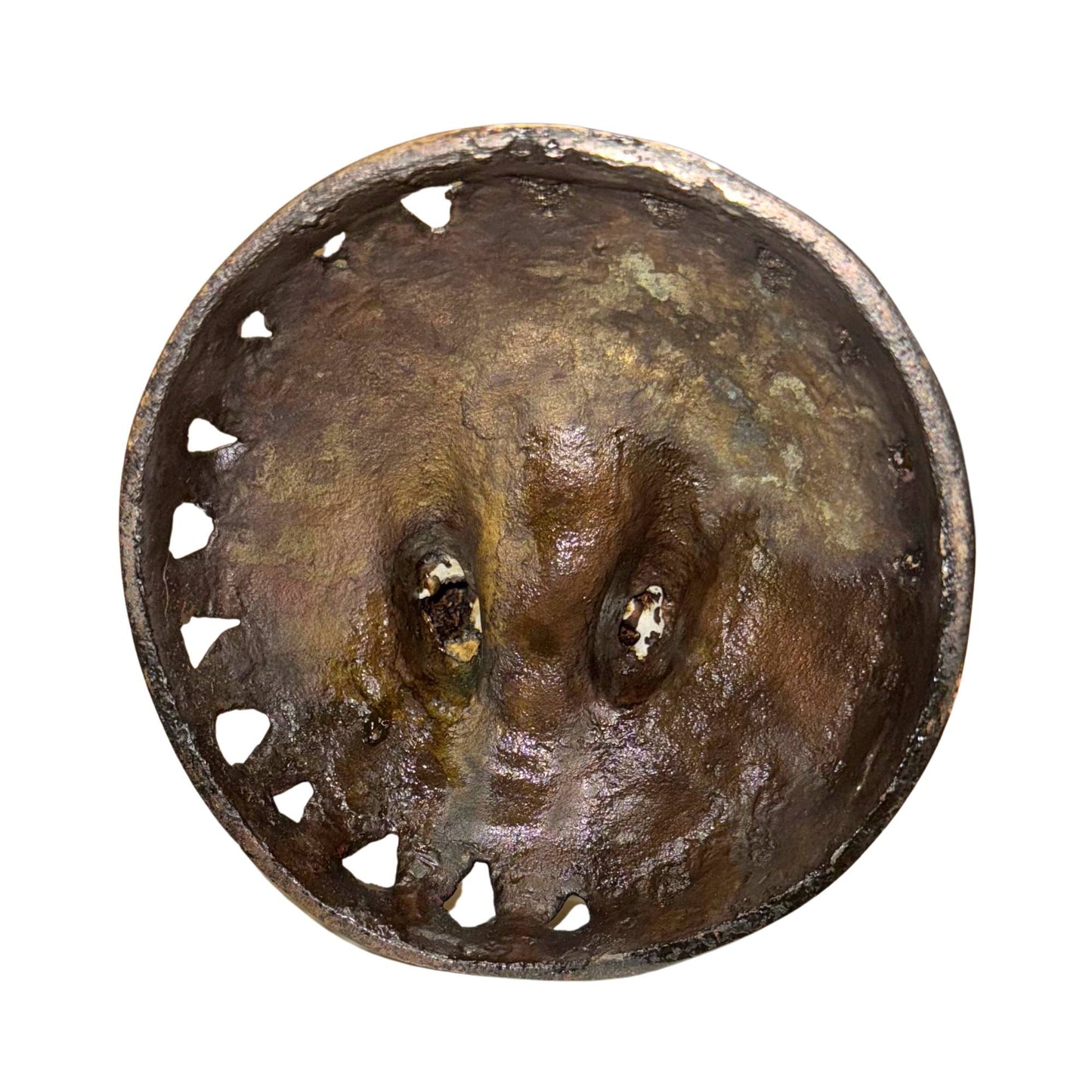
- Microscopic Borax Crystals: Deep within the hand-chiseled crevices of the metal and on the inside of the open lotus base are natural efflorescences of crystallized borax salt (the historical flux). These minuscule, hard grains have sweated out of the pores of the bronze over the course of more than 150 years due to humidity and lie immovably embedded under the centuries-old, greasy temple patina (burned-in incense soot).
- Traditional Open Casting: The underside shows the whimsical, undulating metal folds of the ancient casting process and the irregular, hand-carved triangular openings of the openwork throne. Free from modern plaster residues or factory post-treatments.
Product details
| Product name: | Green Tara (Syama Tara) |
| Region / Style: | Himalayan region (Nepal / Pala-style tradition) |
| Period: | 18th / early 19th century (ca. 1780–1820) |
| Material: | Heavy cast bronze with partial fire gilding (parcel-gilt) and original cold lacquer pigments |
| Dimensions: | 51 cm (H) x 19 cm (W) |
| Weight: | 4.00 kg |
| Condition: | Exceptional, pristine antique condition. Beautiful layered patina and 100% original, unopened casting core. |