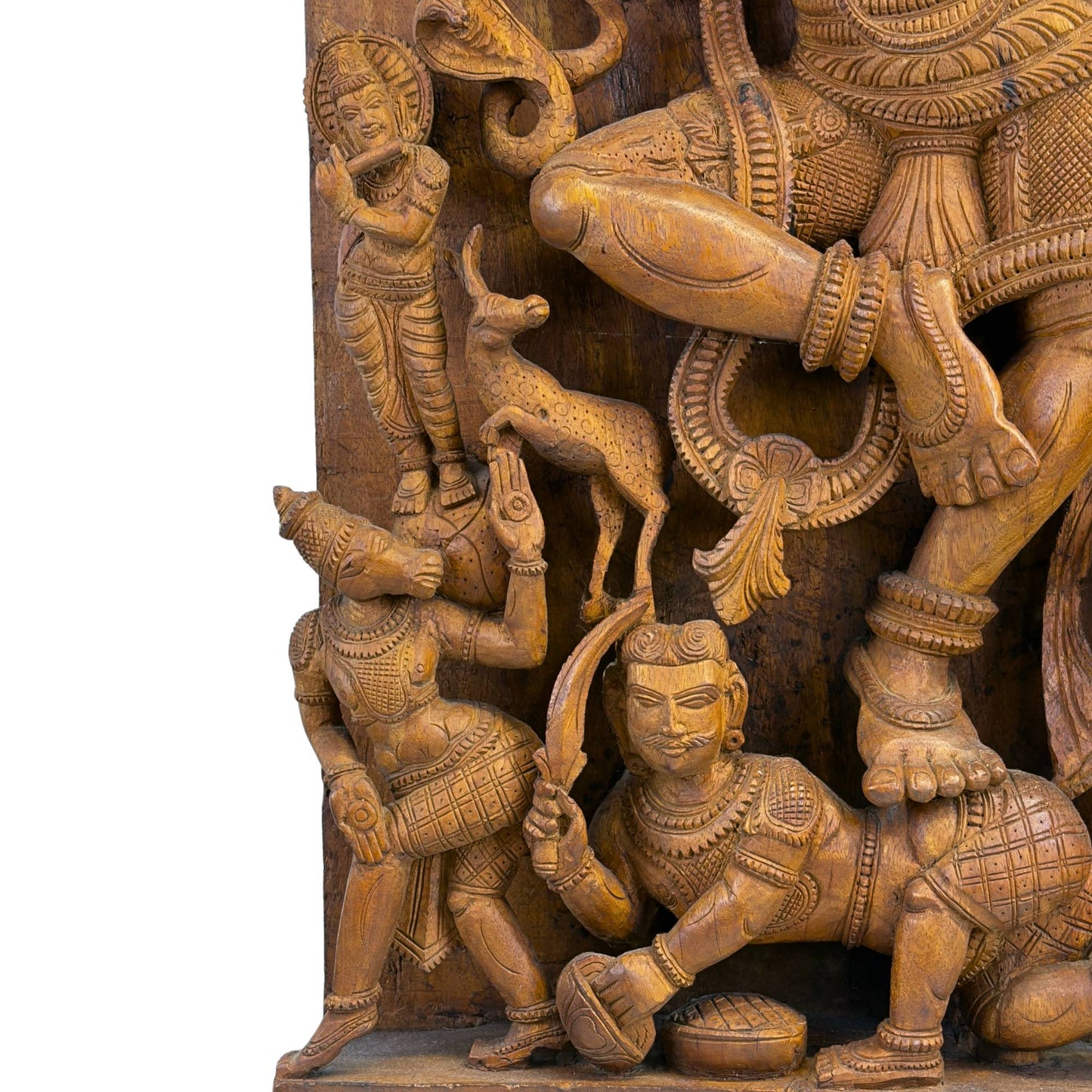
South Indian Temple Panel: Shiva Nataraja (Ananda Tandava)
An exceptionally detailed and monumental architectural temple panel in high relief (alto-rilievo), crafted from a single massive plank of dense hardwood. This monolithic masterpiece depicts the principal Hindu deity Shiva in his cosmic dance posture, the Ananda Tandava (Dance of Bliss). Originally, this panel served as a ritual structural element within the architecture of a South Indian temple (Mandapa) or as a monumental decorative piece on a ceremonial temple chariot (Ratha) in Tamil Nadu.
Iconographic Analysis & Mythological Tableau
The central composition is dominated by the multi-armed manifestation of Shiva Nataraja, dynamically balancing in the cosmic dance pose. Under his right foot, he tramples the dwarf demon Apasmara (also known as Muyalaka), the personification of spiritual ignorance and ego, symbolizing the triumph of universal consciousness.
In his upper hands, Shiva holds his classic attributes: the Trishula (trident) as a symbol of the three creative forces, and the Damaru (drum) which produces the primordial sound of creation. One of his right hands is raised in the Abhaya mudra, the universal gesture of protection and reassurance.
Shiva is flanked by a rich, adoring mythological retinue:
- Brahma (right side): The multi-headed creator god is depicted seated, playing the traditional two-sided drum (Mridangam) to accompany the rhythm of the cosmos.
- Tandu & Ganas (left side): On the left side is a hybrid companion with a horse's head—an iconographic reference to the divine attendant Tandu, the founder and choreographer of the Tandava dance. Additionally, a flute-playing celestial musician (possibly the sage Bhringi), a leaping deer (Mriga), and a flaming cobra (Naga) adorn the tableau.
The top of the panel is crowned by an opulent, openwork floral scrollwork emerging from the monumental mask of Kirtimukha (the 'Face of Glory').