Mudras & Symbolism
A Guide for the Critical Collector
"In Asian art, no detail is accidental. Every hand gesture, posture, and attribute narrates the story of enlightenment and defines the iconographic value of the object."
Explore Buddha Hand Gestures in Detail
For a closer comparison of hand positions, meanings and documented museum examples, read our Buddha hand gestures guide. Go directly to the gesture you are researching:
1. Bhumisparsha Mudra (Earth Witness Gesture)

This is the most iconic hand gesture in Buddhist art, heavily represented in our Burmese and Thai collections. The right hand rests on the knee with the fingers pointing downward toward the earth. This praises the moment the Buddha summoned the earth as a witness to his victory over temptation and the attainment of ultimate enlightenment.
2. Dhyana Mudra (Meditation Gesture)

The Dhyana Mudra signifies absolute stillness and profound concentration. Both hands rest in the lap, the back of the right hand cradled in the palm of the left hand. For the collector, this gesture projects tranquility and balance—ideal for establishing a meditative focus point within an interior space.
3. Abhaya Mudra (Gesture of Protection & Fearlessness)

In the Abhaya Mudra, the hand is raised to chest height with the palm facing outward. This gesture heralds the rejection of fear, offering direct protection, peace, and reassurance. This presentation reached its aesthetic peak during Thailand's golden age in the Sukhothai style. Here, the mudra is uniquely combined with the 'Walking Buddha' (Phra Lila), where the Buddha elegantly steps forward. The fluid, almost liquid anatomy of the arms and vestments emphasizes transcendent tranquility coupled with the dynamic spiritual movement of the teachings.
4. Vitarka Mudra (Gesture of Discussion and Wisdom)
Vitarka mudra is the gesture of teaching and discussion. The thumb and index finger meet to form a circle, while the other fingers extend upward. Identify the gesture from the hand position itself.
A documented example is the Smithsonian National Museum of Asian Art’s Standing Buddha (S1987.908). Its catalogue describes the raised right hand, with thumb and forefinger meeting, as vitarka mudra. Compare this with our detailed Vitarka explanation.
5. Anjali Mudra (Gesture of Greeting and Devotion)

The Anjali Mudra serves as the universal gesture of greeting, homage, and profound respect. The palms are held closely together directly in front of the chest. At 1stbuddha, we document this gesture iconically on Thepphanom (Thai temple guardians). These kneeling figures welcome the viewer while safeguarding the spiritual sanctuary with absolute dedication.
The principal hands of four-armed Avalokiteshvara, known as Shadakshari Lokeshvara, also meet before the chest in anjali mudra. Our Tibetan Avalokiteshvara sculpture shows this joined-hand posture. The Metropolitan Museum of Art’s Shadakshari Lokeshvara catalogue identifies the same gesture in a documented museum example.
6. Bodhyangi Mudra (Gesture of the Six Elements)
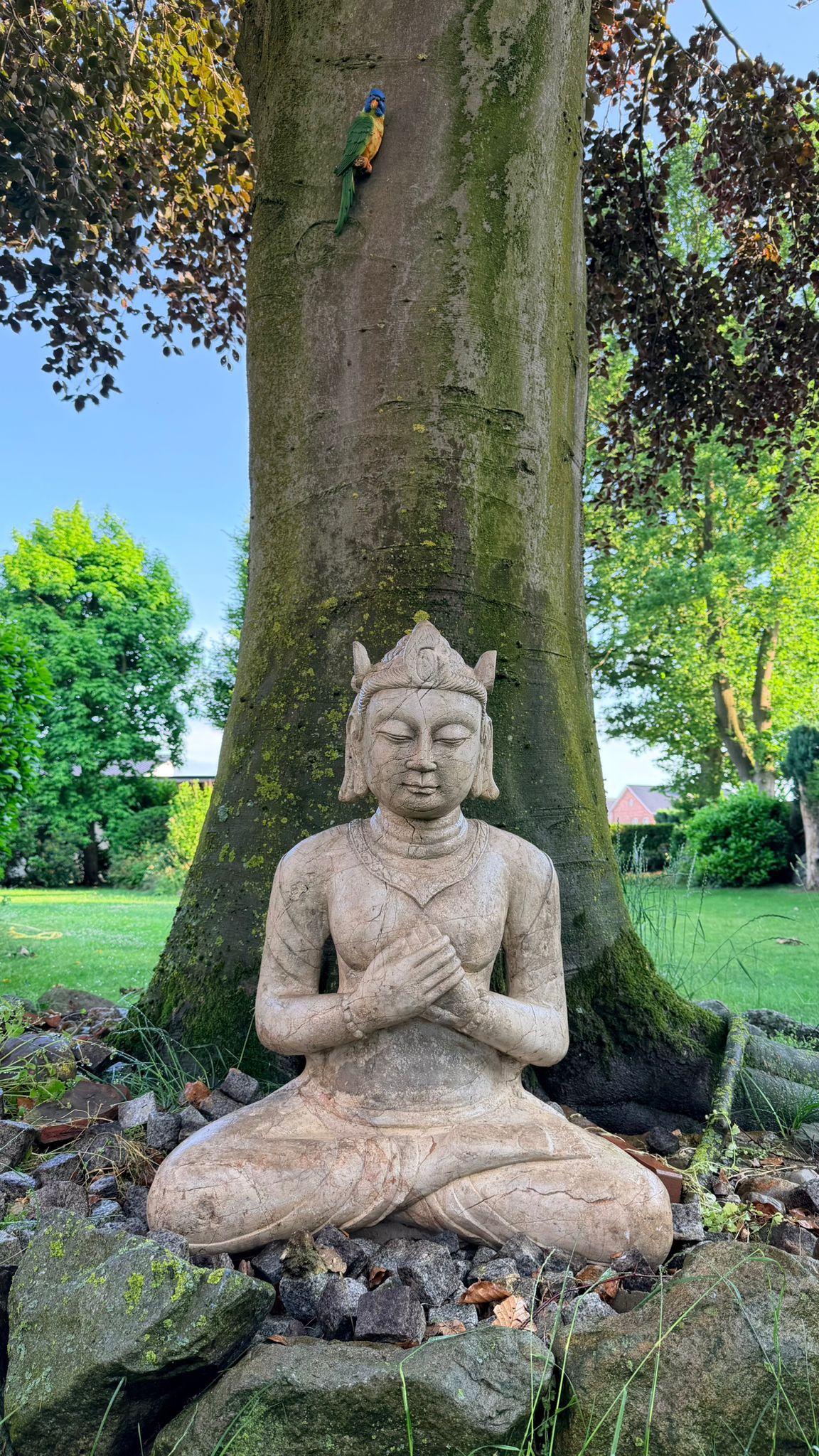
The Bodhyangi Mudra (likewise referenced as the Vajra Mudra) represents a deeply esoteric gesture within Buddhist and Hindu iconographies, where the fist of one hand encloses the index finger of the opposite hand before the chest. As phenomenally illustrated by this 19th-century stone Devi originating from the Javanese or Balinese temple tradition, this mudra honors ultimate synthesis: the fusing of the material cosmos (the five corporeal elements) with supreme, divine consciousness (the sixth element).
7. Varada & Kartari Mudra (Charity & Spiritual Protection)

This dual hand posture serves as the defining attribute of transcendent female Bodhisattvas within Himalayan iconography, specifically the White Tara (Sitatara). The right hand extends downward in the Varada Mudra, the universal gesture of supreme charity, compassion, and the bestowing of spiritual gifts upon humanity. Simultaneously, the left hand balances at chest height in the Kartari Mudra, historically holding the stem of a sacred utpala lotus blooming beside her shoulder. This specific execution protects against the eight universal fears while severing worldly illusions.
Naturalistic Postures of Historical Masters (Resting Posture)
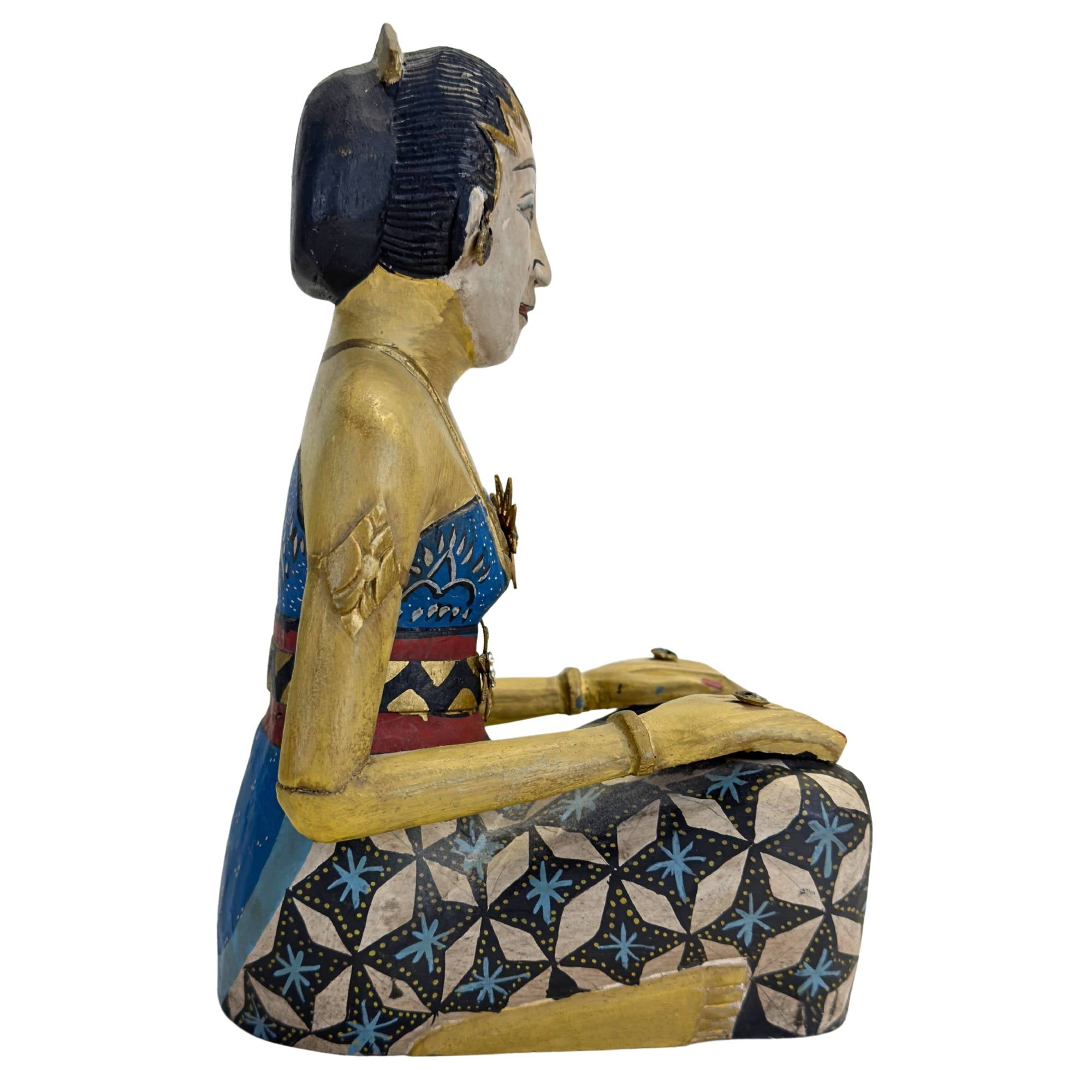
Unlike enlightened Buddhas, who almost strictly present with an active, symbolic mudra, historical masters, enlightened monks (Arhats), and ascetics frequently display a naturalistic seated posture. Both hands rest flatly and relaxed upon the knees or thighs. Rather than referencing a cosmic event, this presentation models profound earthly calm, absolute mindfulness, and monastic discipline. At 1stbuddha, we identify this presentation on rare Thai and Burmese master sculptures where the curatorial focus spotlights the intense, human facial expression of the teacher.