-
Monumental Antique South Indian Wooden Temple Panel of Shiva's Cosmic Dance (107 cm) – 17 kg Solid Hardwood, c. 1900
Regular price $4,048.00 USDRegular price -
Antique Bronze Shiva Nataraja Nepal 36cm lost-wax casting
Regular price $1,351.00 USDRegular price -
Note: 3x Shiva Nataraja Statues – India – Cosmic Dance executed in Bronze.
Regular price $76.00 USDRegular price -
Small Bronze Shiva Nataraja Statue – Indian Altar Statue – 13 cm
Regular price $53.00 USDRegular price -
Compact Bronze Shiva Nataraja Statue – Indian Altar Figurine – 14.5 cm
Regular price $81.00 USDRegular price -
solid-bronze-shiva-nataraja-statue-india-cosmic-dance
Regular price $203.00 USDRegular price -
Indian Shiva Nataraja in bronze and is hand-worked.
Regular price $215.00 USDRegular price -
35 cm Antique Bronze Shiva Nataraja Statue | 4 kg Lead-heavy Bronze | India
Regular price $886.00 USDRegular price -
Rare Bronze Shiva Nataraja from Ladakh – Himalayan Style – 33.5 cm – 1.8 kg
Regular price $452.00 USDRegular price -
Lot 447 – Bronze Nataraja – Indian Temple Style Sculpture
Regular price $1,102.00 USDRegular price -
Shiva Nataraja statue early 20th century in bronze – India – cosmic dance – lot 477
Regular price $1,479.00 USDRegular price -
Antique Fire-gilt Nataraja – Lord Shiva – Early 20th Century (1900-1940)
Regular price $1,682.00 USDRegular price

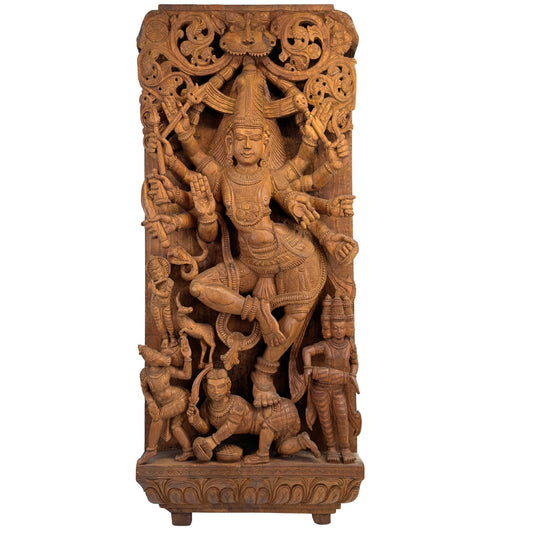

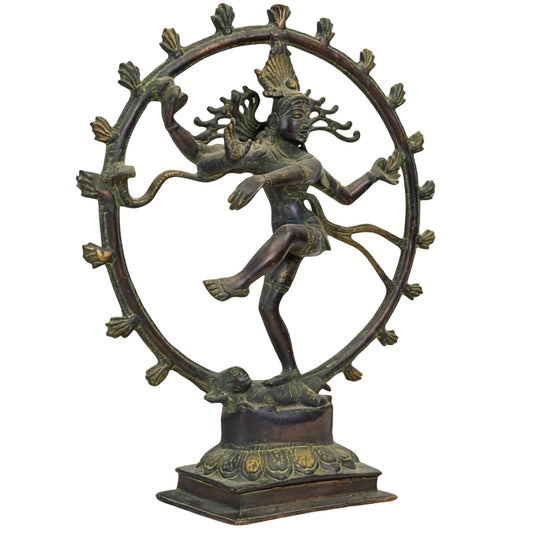

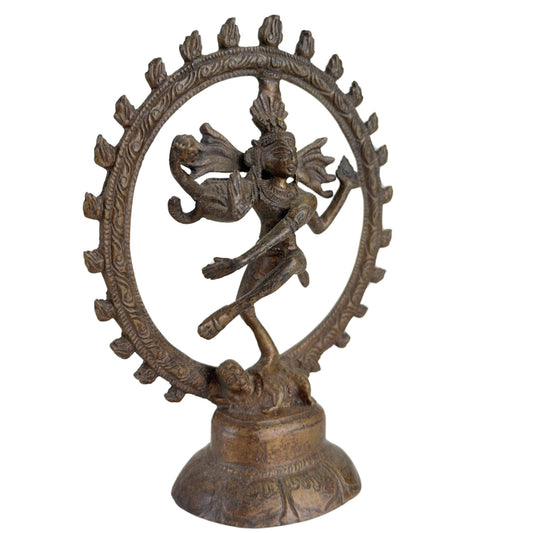

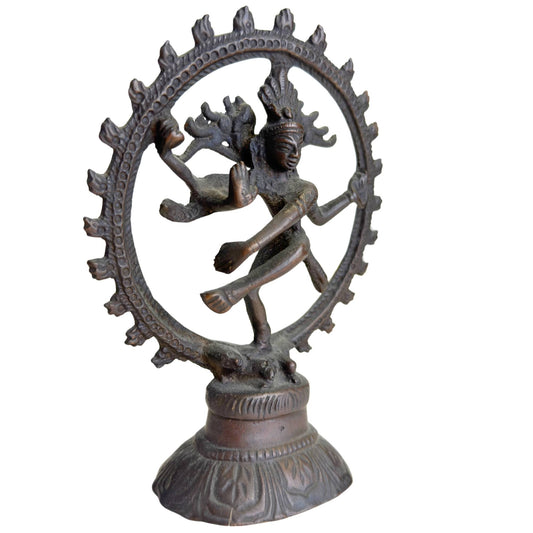

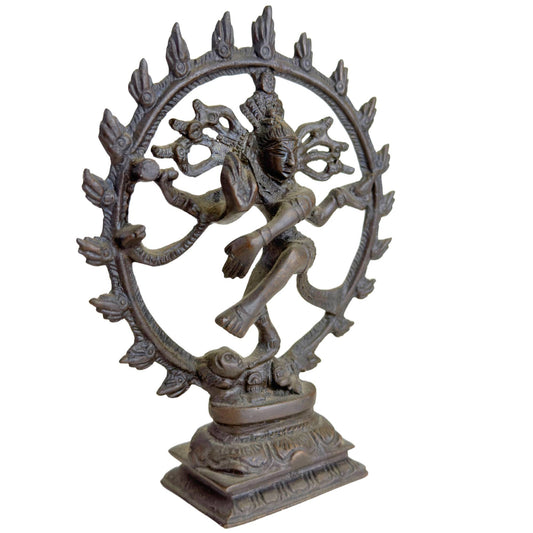

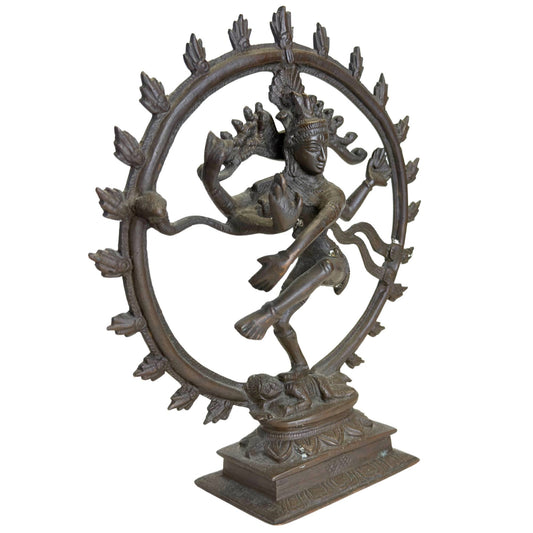

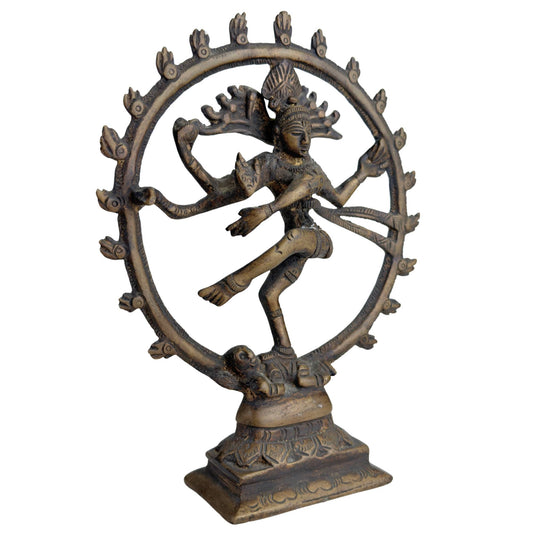

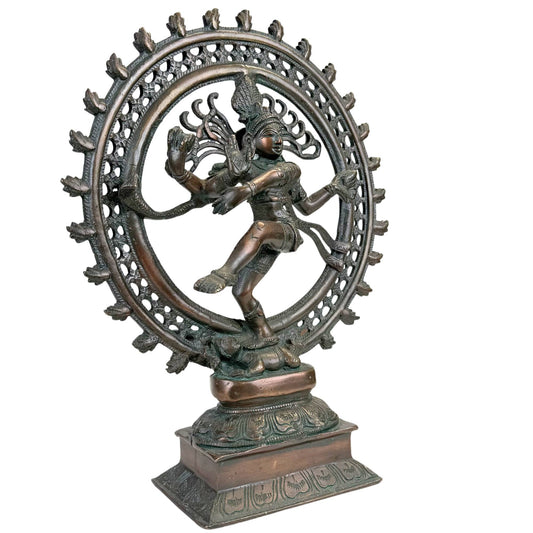




Shiva is one of the most important and multifaceted gods in Hinduism and, together with Brahma and Vishnu, forms the Holy Trinity, the Trimurti. While Brahma stands for creation and Vishnu for preservation, Shiva represents the power of destruction and renewal. This sounds destructive at first glance, but in Hindu philosophy, destruction is a necessary part of the cosmic cycle. Shiva breaks down the old to make room for new growth, transformation, and spiritual development.
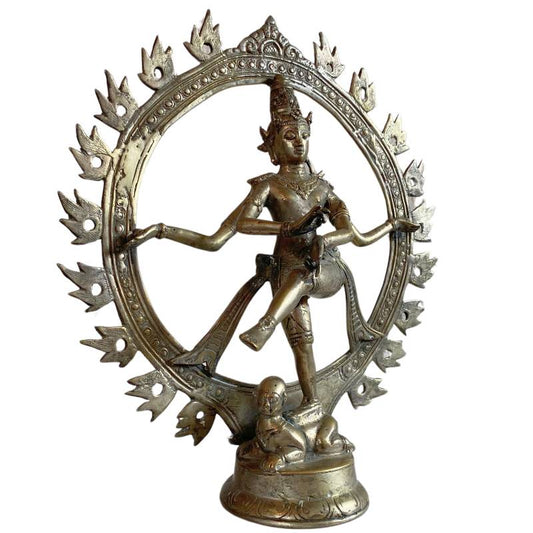
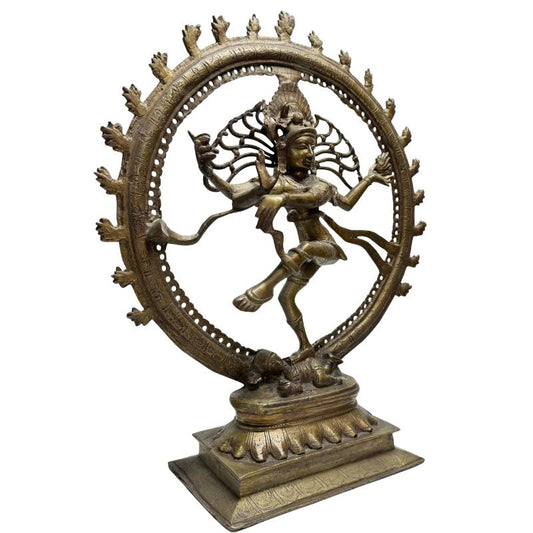
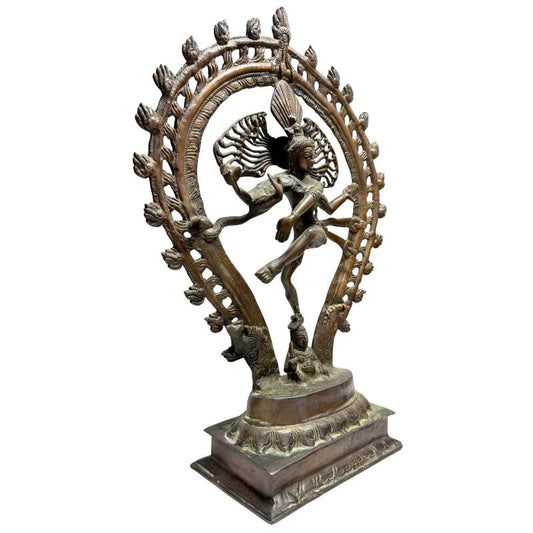
In iconography, Shiva is depicted in various ways, each with its own meaning. One of the most well-known forms is Shiva Nataraja, the cosmic dancer. In this dynamic representation, Shiva dances within a circle of flames, which symbolizes the universe. His dance, the Tandava, represents the continuous movement of existence: creation, preservation, and destruction united in a single rhythm. Beneath his foot lies the demon Apasmara, who represents ignorance and ego. By overcoming these, Shiva shows the way to knowledge and enlightenment. Shiva is often depicted with characteristic attributes such as the trident (trishula), which symbolizes the three fundamental forces of the universe, and the snake around his neck, which represents control over fear and death. His hair is often depicted as flowing wildly, from which the sacred Ganges River originates. This emphasizes his role as mediator between heaven and earth. The crescent moon in his hair refers to time and cyclical change.
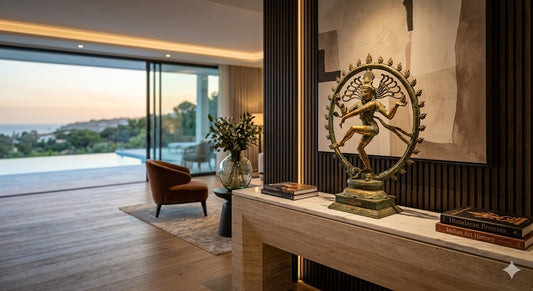
Images of Shiva, and in particular Shiva Nataraja, are not only religious objects but also powerful symbols of balance, energy, and inner strength. They have been used in temples and home altars for centuries but also hold a strong aesthetic and spiritual appeal in modern interiors. The combination of movement, symbolism, and craftsmanship makes these statues beloved collectibles and meaningful works of art.
For lovers of Asian art and spiritual objects, a Shiva statue offers a deep layer of meaning. It stands not only for religion but also for personal growth, letting go, and finding balance in an ever-changing world. As a result, Shiva remains relevant and inspiring to this day, both as a deity and as an artistic motif.
In iconography, Shiva is depicted in various ways, each with its own meaning. One of the most well-known forms is Shiva Nataraja, the cosmic dancer. In this dynamic representation, Shiva dances within a circle of flames, which symbolizes the universe. His dance, the Tandava, represents the continuous movement of existence: creation, preservation, and destruction united in a single rhythm. Beneath his foot lies the demon Apasmara, who represents ignorance and ego. By overcoming these, Shiva shows the way to knowledge and enlightenment. Shiva is often depicted with characteristic attributes such as the trident (trishula), which symbolizes the three fundamental forces of the universe, and the snake around his neck, which represents control over fear and death. His hair is often depicted as flowing wildly, from which the sacred Ganges River originates. This emphasizes his role as mediator between heaven and earth. The crescent moon in his hair refers to time and cyclical change.
Images of Shiva, and in particular Shiva Nataraja, are not only religious objects but also powerful symbols of balance, energy, and inner strength. They have been used in temples and home altars for centuries but also hold a strong aesthetic and spiritual appeal in modern interiors. The combination of movement, symbolism, and craftsmanship makes these statues beloved collectibles and meaningful works of art.
For lovers of Asian art and spiritual objects, a Shiva statue offers a deep layer of meaning. It stands not only for religion but also for personal growth, letting go, and finding balance in an ever-changing world. As a result, Shiva remains relevant and inspiring to this day, both as a deity and as an artistic motif.