-
Antique Gilded Thai Naga Buddha Statue – Muchalinda Protection – 19 cm
Regular price $575.00 USDRegular price -
Khmer Naga Buddha Bronze Statue Mucalinda – Solid Bronze – 22 cm – 2.2 kg
Regular price $809.00 USDRegular price -
Thai Bronze Naga Buddha – Gilded – Rattanakosin Style Temple Statue
Regular price $801.00 USDRegular price -
Naga Buddha set in brass – Southeast Asia (lot 181)
Regular price $111.00 USDRegular price -
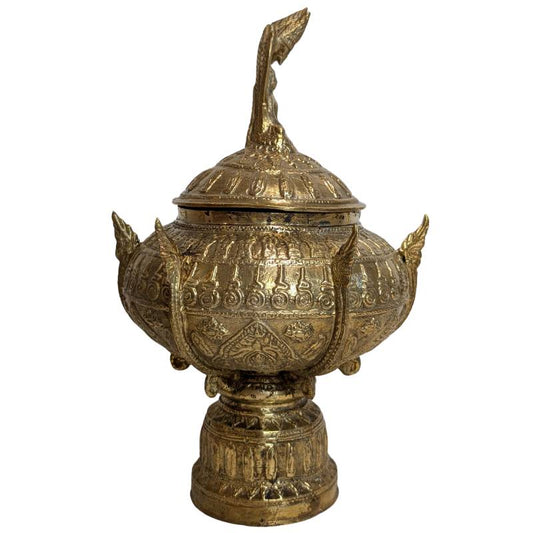
Antique Ritual Offering Bowl with Naga Lid – Bronze – Southeast Asia
Regular price $447.00 USDRegular price

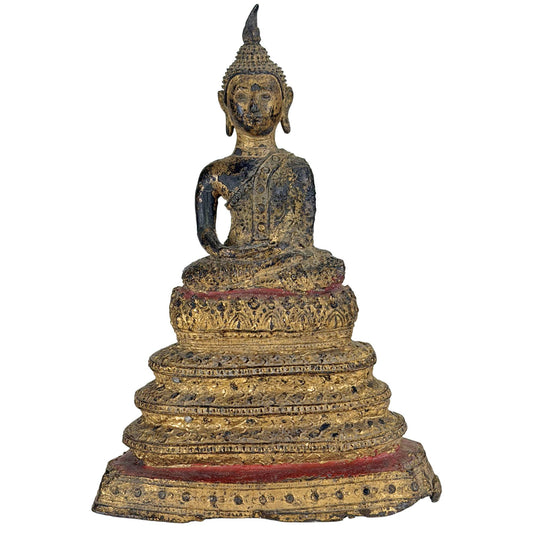

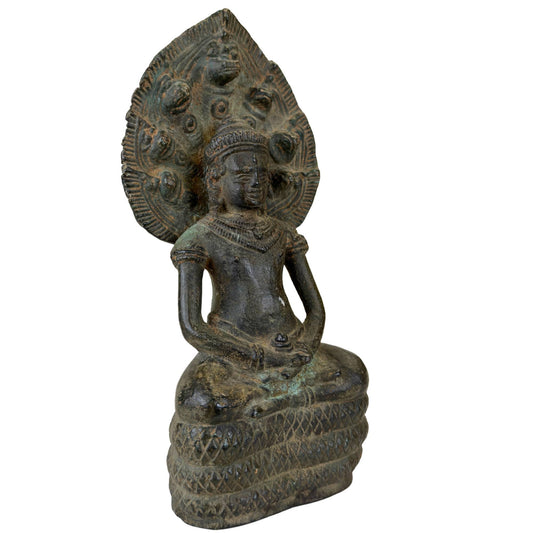

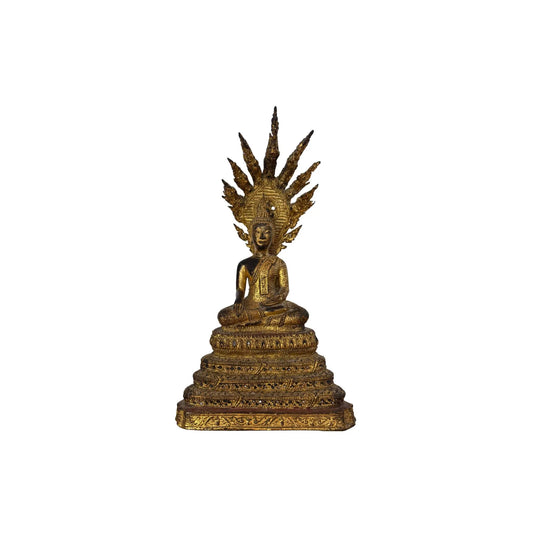

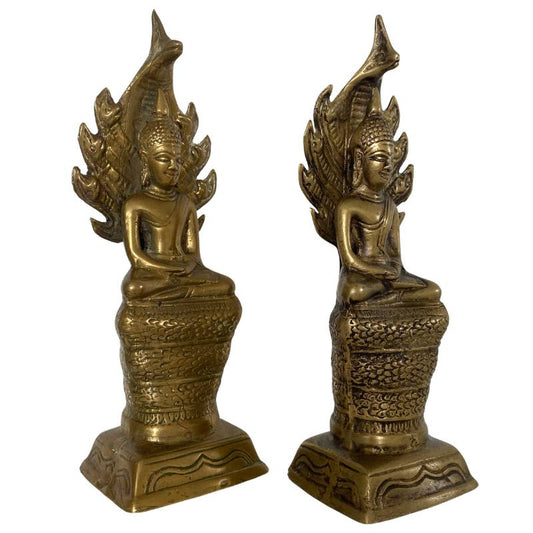

The Naga Buddha – also known as Pang Nak Prok – is one of the most iconic and spiritually charged representations within Buddhism in Southeast Asia. This specific pose depicts the Buddha in deep meditation, seated on the coiled tail of the Naga Muchalinda, while multiple snake heads spread out above him like a protective shield.
According to tradition, this moment took place shortly after the Buddha's enlightenment. While he was sitting in meditation, a severe storm broke out. The Naga, a powerful serpent spirit and protector of nature, rose from the earth and offered his body as protection. His hoods held back the rain, while his body held the Buddha above the water.
This scene is more than just a story. It represents a profound spiritual principle: complete inner peace, even amidst chaos. Where the outside world is turbulent, the core remains untouched.
In Thailand, Laos, and Cambodia, the Naga is not only a mythological creature but an essential part of the culture and religion. Temples are often guarded by Nagas, and bridges are flanked by snake forms that symbolize the transition between the earthly and the spiritual.
An authentic Naga Buddha is immediately recognizable by:
* the multi-headed snake (often 5, 7, or 9 heads)
* the protective fan shape above the Buddha's head
* the meditating posture (Samadhi)
* and the integration of the Naga into the base of the statue
These statues require technical craftsmanship. Especially older examples, cast using the traditional lost-wax method, show clear traces of hand finishing, wear, and natural patina buildup. These are crucial indicators of authenticity.
What many people underestimate is that the Naga Buddha is not only a religious object but also a powerful visual statement. The combination of symmetry, movement, and protection creates an image that immediately attracts attention while simultaneously radiating tranquility.
For collectors and serious buyers, the value lies not only in the material but in the correct execution of this complex iconography. A well-executed Naga Buddha possesses balance, tension, and detail—without feeling forced.
Within the birth day tradition, this pose is associated with Saturday. People born on this day are seen as independent, analytical, and mentally strong. The Naga Buddha reinforces these qualities and is often chosen as a personal protective image.
At 1stbuddha, we select only Naga Buddhas that meet these criteria. No mass production, but statues with character, history, and substance.
According to tradition, this moment took place shortly after the Buddha's enlightenment. While he was sitting in meditation, a severe storm broke out. The Naga, a powerful serpent spirit and protector of nature, rose from the earth and offered his body as protection. His hoods held back the rain, while his body held the Buddha above the water.
This scene is more than just a story. It represents a profound spiritual principle: complete inner peace, even amidst chaos. Where the outside world is turbulent, the core remains untouched.
In Thailand, Laos, and Cambodia, the Naga is not only a mythological creature but an essential part of the culture and religion. Temples are often guarded by Nagas, and bridges are flanked by snake forms that symbolize the transition between the earthly and the spiritual.
An authentic Naga Buddha is immediately recognizable by:
* the multi-headed snake (often 5, 7, or 9 heads)
* the protective fan shape above the Buddha's head
* the meditating posture (Samadhi)
* and the integration of the Naga into the base of the statue
These statues require technical craftsmanship. Especially older examples, cast using the traditional lost-wax method, show clear traces of hand finishing, wear, and natural patina buildup. These are crucial indicators of authenticity.
What many people underestimate is that the Naga Buddha is not only a religious object but also a powerful visual statement. The combination of symmetry, movement, and protection creates an image that immediately attracts attention while simultaneously radiating tranquility.
For collectors and serious buyers, the value lies not only in the material but in the correct execution of this complex iconography. A well-executed Naga Buddha possesses balance, tension, and detail—without feeling forced.
Within the birth day tradition, this pose is associated with Saturday. People born on this day are seen as independent, analytical, and mentally strong. The Naga Buddha reinforces these qualities and is often chosen as a personal protective image.
At 1stbuddha, we select only Naga Buddhas that meet these criteria. No mass production, but statues with character, history, and substance.